Can a fragment do a whole protein’s work in KLOW peptide?
A mouse heart experiment used full thymosin beta-4. KLOW contains its short TB-500 fragment. How much of the protein’s repair activity survives that shortening?
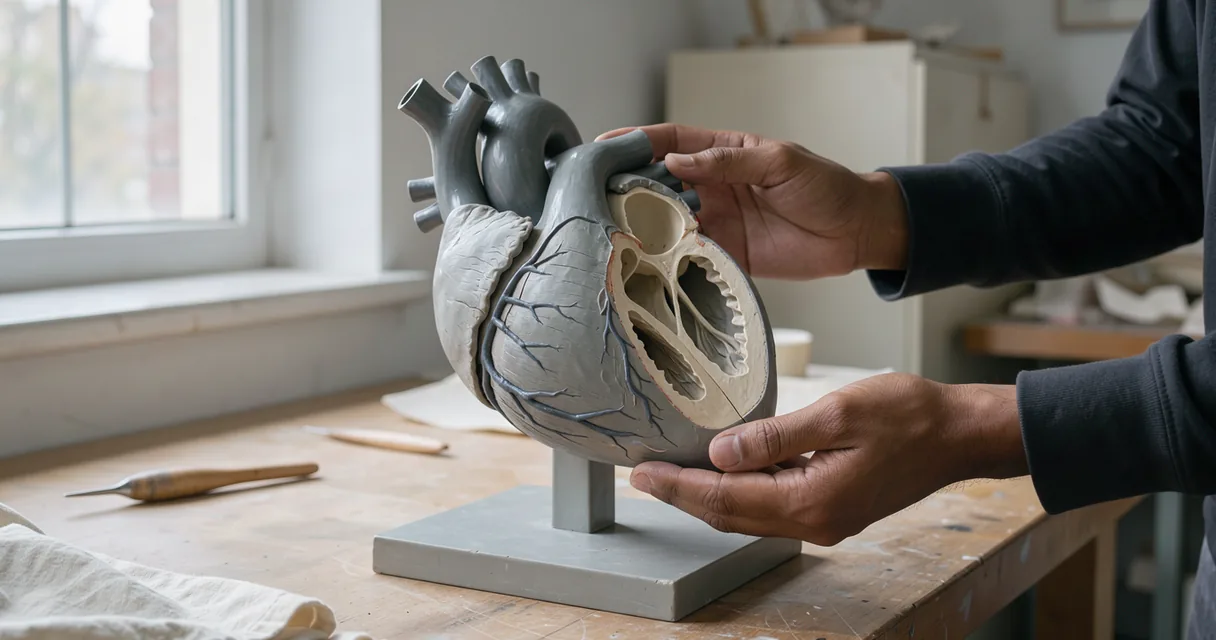
Cells from the heart’s outer layer
In a 2007 mouse heart study, full thymosin beta-4 mobilized progenitor cells from the epicardium, the heart’s outer layer, and supported new-vessel formation after ischemia, an inadequate blood supply. KLOW peptide uses TB-500, a short fragment of that protein. The experiment tested the full protein.
I had imagined “heart repair” as a question about muscle. Cells mobilized from the heart’s outer layer are surprising enough. The shortening unsettles that enthusiasm: which of those activities can the TB-500 fragment actually perform? The cardiac work established them for full thymosin beta-4; they remain unestablished for the fragment.
“Terminal” suggests the end of an experiment to me. Here the experiment ends with a result for the full protein in mice. Giving its short fragment the same repair reputation takes another experiment. That missing comparison governs how much weight the protein’s findings deserve in a discussion of KLOW.
Circulation and repair
Relaxing an existing blood vessel and growing new vessels are different events. Both turn up in the literature gathered around KLOW. A 2025 review of BPC-157 and nitric oxide connects vascular signaling with the wider animal repair research; separate cell work with full thymosin beta-4 increased VEGF, a protein involved in vessel growth.
These vascular findings give the fragment question some biological context. The full protein supplied much of the vessel-growth and wound evidence; the short TB-500 fragment in KLOW still needs evidence for those activities.
I want a recovery claim to name both the molecule tested and the measurement it rests on. The blood-flow page follows the vascular findings; results in tissue and cells includes the wound work with full thymosin beta-4.
What is KLOW peptide?
KLOW is a laboratory blend of KPV, GHK-Cu, BPC-157 and TB-500. The usual 80 mg label lists GHK-Cu 50 mg and 10 mg each of the other ingredients. The molecules remain chemically distinct in the mixture. No controlled study has tested the complete blend against one ingredient, a smaller combination or placebo.
The ingredient names point toward several research interests: inflammation, collagen, vascular behavior and cell movement. Combining them is a hypothesis about repair. None of the four, alone or as KLOW, has FDA approval for human use.
The ingredient cards identify the molecules. The dosage page explains the label, experimental quantities and the missing evidence for a human schedule.
Does KLOW increase heart rate?
The published record here cannot establish whether KLOW increases heart rate, or how often that might happen. The rat vessel-response finding concerns BPC-157 and vascular tissue. A pulse in a person taking the blend would be a different measurement.
A brief BPC-157 safety pilot in two healthy adults reported no observed adverse events or measurable changes in the listed cardiac and other safety biomarkers. It tested BPC-157 by itself. Its size and short observation leave the larger safety questions open.
A mechanism seems a poor substitute for a measured symptom; I won’t press it into that job. KLOW side effects puts the heart-rate question beside the anecdotal complaints, copper concerns and sports rules.